









Only Farming, No Construction: Noida Crackdown on 250 Illegal Farmhouses in Yamuna Floodplains
Only Farming, No Construction: Noida Crackdown on 250 Illegal Farmhouses in Yamuna Floodplains
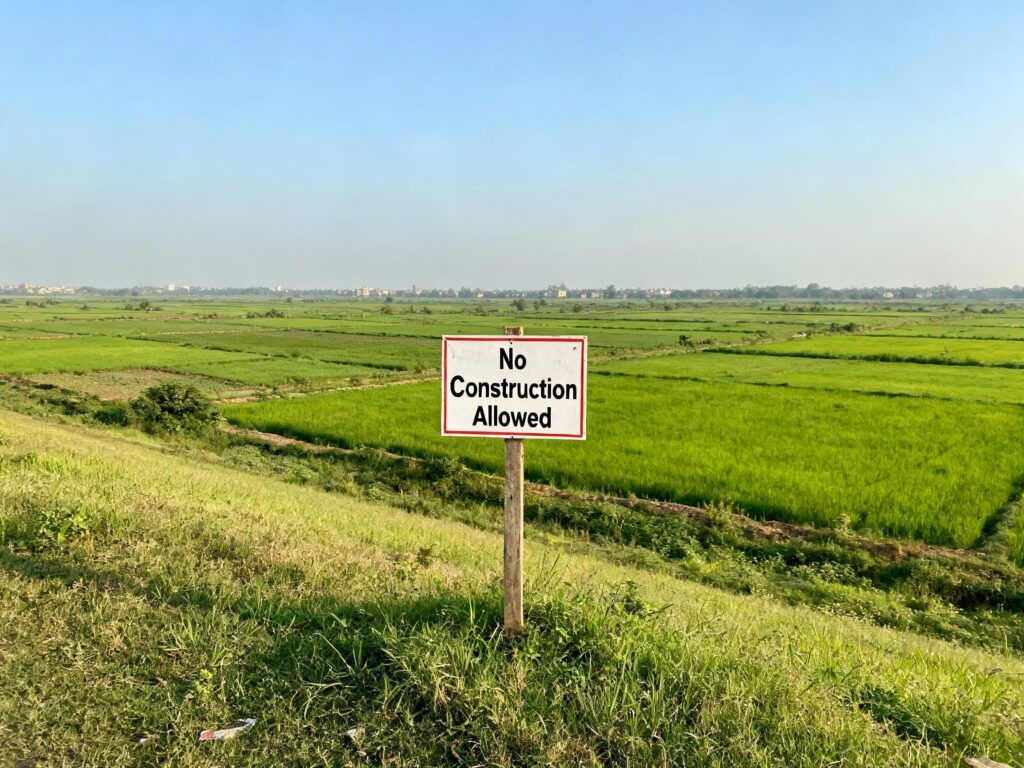
Noida — A massive crackdown is once again gathering momentum along the Yamuna floodplains as the Noida Authority prepares to issue fresh notices to nearly 250 farmhouse owners for violating one of the most critical environmental and land-use restrictions in the region: building permanent structures on land designated only for farming.
The directive, aimed at reclaiming and protecting the floodplain zones from illegal construction, underscores a renewed determination by the Authority to enforce compliance across the Yamuna and Hindon river belts. These lush, low-lying zones form the city’s natural drainage and ecological buffer, but over the years, they’ve become dotted with lavish farmhouses and concrete structures — a direct violation of floodplain regulations.
What makes this operation significant is not just its scale, but its timing. After a temporary slowdown caused by court interventions, Noida is back with a more data-driven approach, backed by drones, digital maps, and stronger accountability measures for officers and landowners alike.
The Rule: Farming Land, Not Construction Sites
Under existing rules, areas marked as floodplains of the Yamuna and Hindon rivers fall within the submerged or eco-sensitive zones. In these regions, the land’s natural purpose is agricultural activity. It serves to absorb excess water during floods and helps maintain ecological balance.
Officials emphasize that owning or trading farmland in these regions isn’t illegal as long as the usage remains agricultural. What’s strictly banned, however, is the transformation of these lands into residential retreats or commercial setups — a trend that’s accelerated over the last decade.
From luxury farmhouses doubling as event venues to permanent multi-room constructions with swimming pools and lawns, the misuse of agricultural land has crossed serious environmental and legal boundaries. Several property buyers, drawn by the affordability and proximity to central Noida, have either ignored or been misled about these restrictions.
250 New Notices: What Triggers the Crackdown
According to senior officials from the Noida Authority, fresh notices will soon reach 250 property owners whose structures have been spotted in recent aerial mapping and field inspections. The instructions are clear: stop all illegal development or face demolition and financial penalties.
The trigger for this renewed action came after an internal review meeting chaired by Noida Authority CEO Lokesh M, who directed officials to expedite an aerial survey across the floodplains. Drones have already begun scanning zones extending from Sector 94 near the Delhi border to Sector 168, where the Yamuna bends toward the expressway.
“The first phase of notices will depend entirely on the data gathered from the drone mapping,” said an Authority official on condition of anonymity. “The aim is to pinpoint areas of encroachment, identify permanent structures, and differentiate between agricultural and non-agricultural use.”
These surveys are not limited to detecting illegal construction. They also track the increasing commercial activity taking place under the guise of farmhouses — venues hosting parties, weddings, or being rented out for film shoots. As officials clarified, such usage directly violates land-use norms even if the property carries old ownership titles.
Why This Matters: The Environmental Angle
Floodplains are essential to river ecology. They act as natural sponges that absorb excess rainwater and help prevent flooding in densely populated areas. When these zones are concretized, water has nowhere to go during heavy rainfall, leading to urban flooding — a problem already visible in parts of Delhi and Noida.
Environmentalists argue that rebuilding these regions as green buffers is crucial to the health of the river and the city. Illegal farmhouse construction not only narrows the river’s flow channel but also introduces pollution, as sewage and waste from these structures often leach into the river.
The Noida Authority’s push for a “farming-only” policy aligns with broader environmental regulations laid down by the National Green Tribunal (NGT) and the Uttar Pradesh Irrigation Department, which prohibit any non-agricultural activity in floodplain zones.
The Legal Tug of War: High Court Stays and Status Updates
This isn’t the Authority’s first confrontation with illegal farmhouses. Since May 2022, demolitions have been carried out in phases, with around 200 structures already razed from Yamuna floodplain areas. However, the process faced a major setback when several property owners approached the Allahabad High Court and obtained interim stay orders on demolition.
These legal interventions temporarily paused field actions. But now, with court hearings nearing conclusion in some cases, the Authority is gearing up for the next phase of enforcement.
Officials added that special legal teams will ensure that notice procedures are watertight this time, leaving little room for owners to challenge demolition drives on procedural grounds.
Mapping the Hotspots: Sectors Under Scanner
The Yamuna River passes through multiple prime sectors — including 94, 124, 125, 127, 128, 131, 133, 134, 135, 150, and 168 — that have seen increased encroachment because of their proximity to key developments like the Noida-Greater Noida Expressway and the upcoming Jewar Airport corridor.
The Hindon River, a Yamuna tributary, also flows through critical zones such as Chhijarsi, Shahdara, Suthiana, Garhi Chowkhandi, and Sectors 115, 118, 123, 143, 143A, 148, and 150, before merging with the Yamuna near Sector 63A and Behlolpur.
All these are designated submerged zones, where the groundwater table is high, and flooding risk remains throughout the monsoon. Any permanent construction here disturbs the natural hydrology — making the crackdown both an environmental and urban-planning necessity.
Accountability Tightens: Officers to Face Action Too
In a notable shift, the Noida Authority’s CEO has introduced new accountability measures. Officials from both the Authority and the Irrigation Department could now face disciplinary action if illegal construction is found under their supervision.
The CEO instructed that large public hoardings be installed across floodplain boundaries, clearly warning residents and brokers that selling or buying land for construction in these zones is illegal. The message aims to deter potential investors often misled by unethical property agents.
Moreover, a joint monitoring team headed by a sub-divisional magistrate (SDM) has been formed exclusively for the Hindon stretch. This team will be responsible for on-ground vigilance, coordination with local police, and reporting directly to the Authority’s enforcement wing.
The Future of Existing Farmhouses
While there’s no immediate plan to demolish older structures in the Hindon floodplain, officials clarified that no fresh construction permissions will be allowed. The focus right now is on preventing expansion or new development.
“Existing violators will face scrutiny in later phases,” an official said. “But the priority is ensuring that no new illegal activity ruins the ecological balance further.”
Authorities hinted that some long-standing farmhouses could still face demolition once the aerial survey completely maps pre- and post-2022 constructions.
The Cost of Violation: Demolition and Recovery
In June 2022, the Noida Authority had already issued a public warning in newspapers and through digital media, declaring that any construction within Yamuna or Hindon floodplains is a punishable offence.
If owners continue violating these norms despite warnings, the Authority will not only demolish their structures but also recover the cost of demolition from the violators. This includes expenses related to machinery, manpower, debris removal, and restoration of the natural floodplain topography.
Such cost recovery serves a dual purpose — enforcing accountability and discouraging speculative construction that banks on legal delays.
Real Estate Impact: Lessons for Buyers and Developers
For prospective property buyers and investors, this renewed enforcement drive is a reminder to conduct comprehensive due diligence before purchasing land in semi-rural or river-adjacent zones. Just because a plot appears well-connected or has visible construction nearby does not make it legally viable.
Experts recommend verifying land classification in Noida’s Master Plan 2031, cross-checking revenue records, and consulting local development authorities before buying farmland. If the plot falls within a floodplain, only agricultural activity — such as organic farming, horticulture, or livestock — is legally permitted.
Moreover, developers operating farmhouse-themed projects should obtain environmental clearance and ensure their marketing aligns with permitted land use. Misleading promotion of luxury farmhouse plots within prohibited zones can invite serious legal trouble under the Real Estate (Regulation and Development) Act (RERA) and environmental protection laws.
The Way Forward: A Cleaner, Greener River Belt
As Noida transforms into a major residential and industrial hub, protecting its natural water bodies has become more urgent than ever. The Authority’s “no construction — only farming” approach could mark a turning point in how the city balances urban expansion with ecological preservation.
The upcoming months will test how strictly these directives are implemented — and whether landowners heed the warnings. For now, the message from the Noida Authority is unambiguous:
The floodplain belongs to the river, not to real estate.